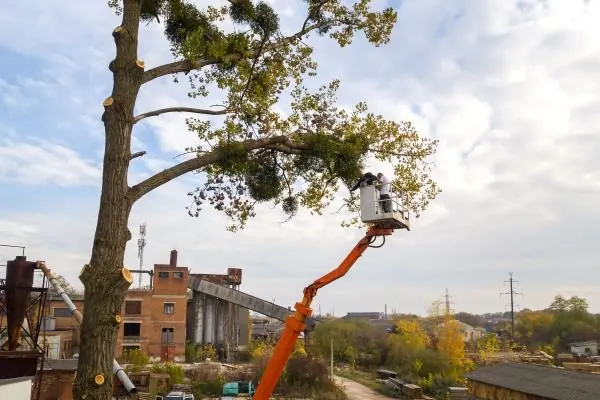
Tree work in Wynnum
Wynnum sits on the shore of Moreton Bay in Brisbane's east. Its streets mix older timber and fibro homes on generous blocks with newer townhouses and units. Being on the water shapes almost every tree job here.
Bayside gardens tend to be full of salt-tolerant plantings: Norfolk Island pines, paperbarks, casuarinas, cocos and fan palms, with poincianas, mangoes and figs in older backyards. Some of these cope beautifully with the coast. Others struggle and decline, and that is often when the call comes.
What the bay does to trees
Wind. Onshore winds blow straight off the bay with nothing to slow them down. Tall trees on exposed blocks take the full force, and summer storms that cross the bay arrive at full strength.
Salt. Salt spray burns foliage on species that are not suited to it. Over years this causes dieback in the crown, dead branches and a tree that looks thin from the top down. Dead wood in a tall tree is exactly what fails in a storm.
Sandy and wet ground. Soils near the bay are often sandy or silty. Roots spread wide rather than deep. Low-lying parts of Wynnum, near drains and mangrove edges, stay wet for long periods after heavy rain or a high tide, and a tree on soaked sand can tip over in a blow that would not trouble it on a dry day.
Council and the foreshore
Wynnum is in Brisbane City Council. Trees on the esplanade, in parks and on footpaths belong to council, and you must not prune or remove them yourself. On private land, the council's Natural Assets Local Law 2003 can protect some vegetation, including in mapped coastal and waterway areas. Low-lying coastal land can also be mapped for acid sulfate soils, which matters for any deep digging such as stump removal.
Check council mapping, or ask the contractor to, before booking a removal.
Common Wynnum jobs
- Palm clean-ups and removals. Bayside palms dry out and drop fronds faster than inland. Cleaning before storm season is the most common job. See palm tree removal.
- Tall pines. Norfolk Island pines on private blocks grow far taller than most owners expect. Removal near houses is a sectional climb, never a single fell.
- Poinciana and mango. Wide, heavy trees in older backyards, often over roofs and fences.
- Storm damage. Snapped limbs and uprooted trees after a severe cell crosses the bay.
- Stumps. Grinding stumps in sandy ground is usually quick. See stump grinding.
Storm tide and flooding
Low parts of Wynnum can be affected by storm tide and by drainage that backs up in very heavy rain. Trees in those areas spend more time with wet roots. After any big flood or storm-tide event, it is worth having large trees on low ground checked for lean, cracked soil at the base or exposed roots.
The storm season checklist covers what to look for before summer and what to do when a tree comes down.
Getting a price
Call the Wynnum line above or use the form below. Tell us what the tree is, roughly how tall it is, how close it is to the house and whether there are power lines nearby. If you are near the water, mention whether the yard floods. Guide price bands for tree removal and other work are on the prices page.