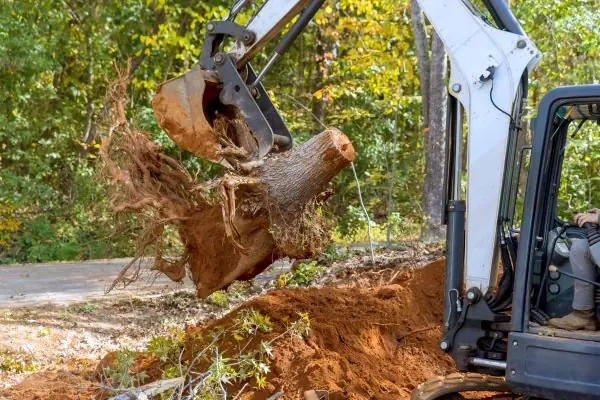
When a stump needs to come out completely
Stump removal in Brisbane is the job you book when the ground is about to carry something. For a lawn or a garden bed, grinding the stump below the surface is usually enough. But a slab, a pool shell, a retaining wall footing or a concrete driveway needs ground without a mass of rotting timber underneath. As old roots break down they leave voids, and voids under concrete become cracks.
Common reasons to take the whole stump out:
- New building work. Extensions, granny flats, sheds and carports with slab floors.
- Pools. The excavation needs to be clean, and roots near the shell can cause trouble later.
- Retaining walls. Footings and drainage behind the wall should not sit in a root plate.
- Driveways and paving. Subsiding roots under pavers show up within a few wet seasons.
- Regrowth. Some species shoot from the stump and roots after grinding, and removal stops that.
How stumps are removed
Excavator extraction. On most suburban blocks with reasonable access, a small excavator digs around the stump, cuts the main roots and levers the stump out. Large stumps may need to be split first. This is the fastest method and gets most of the root plate out in one go.
Grind then dig. Where a big machine cannot get in, the stump is ground down well below the surface, then the remaining roots are dug out with a small excavator or by hand. It takes longer, but it works through a narrow side gate.
Hand removal. For small stumps in tight courtyards, a crew can dig and cut by hand and winch the stump free. It is labour-heavy and suited to small jobs only.
Whatever the method, the hole needs to be backfilled. For a garden, the spoil can go back in. For anything structural, ask your builder what they need. Often it is clean fill compacted in layers.
Brisbane ground and why it matters
Much of Brisbane is clay. Heavy clay holds a stump tightly when dry and becomes sticky and heavy when wet, so the same stump can be easy one month and a mud bath the next. Reactive clays in parts of Ipswich and Logan move noticeably with moisture, which is another reason builders want old root masses out before a slab goes down.
Along creeks and on the bay side the soil is softer, sandier or alluvial, and roots tend to spread wide rather than deep. A large fig or camphor laurel on that ground can have major roots running many metres from the trunk, and those need chasing if the building footprint crosses them.
Underground services
Stump removal is excavation, so treat it like any other dig. Water, sewer and stormwater pipes often run close to old trees because roots go where the water is. Gas, power and communications lines can also be nearby. Before You Dig Australia is the free referral service for asset owners' plans, and a private locator can trace lines on your own property. A careful contractor will ask about this before quoting, not after hitting something.
Removal with the tree, or as a separate job
If the tree is still standing, it is usually cheapest to have the tree removal and stump removal quoted together, because the crew and machinery are already on site. If the tree came down years ago and only the stump is left, it is a straightforward standalone job. If you are not building over the spot, compare with stump grinding, which is usually cheaper and less disruptive.
Pricing
The size of the stump, the species, how far the roots spread, the access and what happens to the spoil all drive the price. Guide bands are on the tree removal prices page. A firm price comes after someone has looked at the stump and the gate.
What to have ready
- A rough diameter of the stump at ground level, or a photo with something for scale.
- The width of your narrowest gate or path between the street and the stump.
- What is going on the site next, and any plans or setout from the builder.
- Anything you know about pipes or cables near the stump.