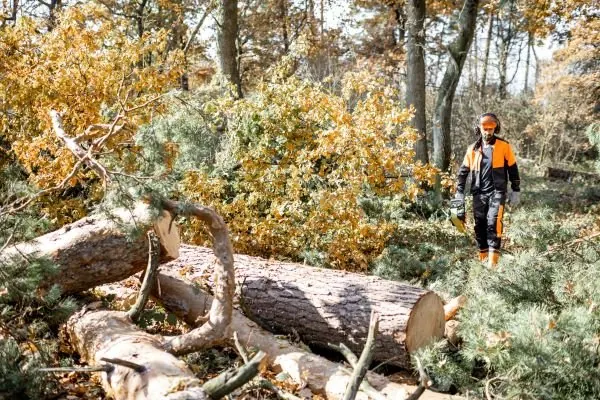
Tree work in Forest Lake
Forest Lake is a master-planned suburb in Brisbane's south-west, built from the 1990s around its central lake and parklands. Most homes are brick and tile on estate-sized blocks, many with compact backyards, and most of the trees in those yards were planted by the first owners.
That is what shapes tree removal in Forest Lake. The trees are not the century-old giants of the inner suburbs. They are planted natives, palms and screening trees that grew far faster than expected and are now crowded against houses, fences and each other.
Why estate trees become problems
They were planted close. Gums, bottlebrush and screening trees were often planted near fences and houses when they were small. Now they overhang roofs, fill gutters and push on Colorbond fences.
Small yards, big roots. Estate blocks leave little room for roots. Trees near the house can affect paths, driveways and in-ground pipes, and on reactive clay, trees drawing moisture from under a slab are a common concern.
Fast natives. Some eucalypts planted in gardens grow tall and narrow and become top-heavy. In a strong south-westerly storm they can drop limbs or snap.
Weedy species. Umbrella trees, cocos palms and some other ornamental plantings spread into parkland. Many owners now replace them.
Council and the parkland edge
Forest Lake is in Brisbane City Council. The council's Natural Assets Local Law 2003 can protect some trees on private land, including in mapped waterway and wetland areas. Homes backing onto the lake, creeks or bushland reserves are the most likely to have mapped vegetation. Trees on footpaths and in the parks belong to council.
Ask the contractor to check, or look up council mapping yourself, before booking.
The ground
Estate blocks are typically clay or clay loam, sometimes with compacted fill from construction. Clay stays wet after long rain, and waterlogged roots make trees easier to push over in wind. Near the lake and drainage reserves, ground is softer still. Machinery may need mats on wet lawn, and some jobs are better done after a few dry days.
Common Forest Lake jobs
- Removing overgrown screening trees along fences, often several in a row.
- Palm removals of Alexander palms and golden canes that have outgrown courtyards. See palm tree removal.
- Gums over roofs that drop limbs and leaves into gutters.
- Stump grinding after trees come out, so lawns and garden beds can go back in. See stump grinding.
- Bamboo screens that have spread beyond the planter. See bamboo removal.
Access on estate blocks
Most Forest Lake homes have a side gate on one or both sides of the house. Measure the narrowest point, including any bins, air-conditioner units or water tanks along the path. That number decides what size chipper and grinder can come through and makes a big difference to how long the job takes.
Storms from the south-west
Storms that build west of Brisbane often reach the south-western suburbs early. Forest Lake's open, newer streets offer less shelter than older suburbs with established canopy. The storm season checklist is worth a read before summer.
Getting a price
Call the Forest Lake line above or send the form. Tell us how many trees, what kind, how tall, how close to the house and fence, and the gate width. Guide prices for tree removal and stumps are on the prices page.