Tree work in Greenbank
Greenbank is a semi-rural suburb in Logan City, on Brisbane's southern fringe. Most of it is acreage: houses on large lots surrounded by native bushland, with spotted gums, ironbarks and Queensland blue gums often right up to the house and sheds. Newer residential pockets sit alongside the larger lots, and a large defence training area nearby keeps much of the surrounding land as bush.
Tree removal in Greenbank is less about fitting through a side gate and more about scale, native vegetation rules, bushfire and koalas.
Big native trees
The trees here are mostly native eucalypts and they are big. Ironbark is extremely hard and heavy. Spotted gums are tall and straight. Blue gums and grey gums can have large spreading crowns. When one of these needs to come down near a house, it is serious rigging work.
On open acreage, trees away from buildings can often be felled directionally, which is quicker. A contractor will look at the lean, the weight of the crown, any dead wood and the clear room before deciding.
Bushfire and fire breaks
Many Greenbank lots are mapped as bushfire-prone. Owners often want trees cleared back from the house, sheds and driveway, and dead trees and low branches removed to reduce fuel. That is sensible, but how much clearing is allowed depends on what is mapped on your land.
Check Logan City Council's planning scheme mapping, and state koala habitat mapping, before clearing native trees. If you are unsure, call council. A contractor can advise on what makes a practical fire break but should not be the one deciding whether clearing is lawful.
Koalas
Koalas live in bushland across parts of Logan. A careful contractor will look up into the canopy of the target tree and the trees around it before starting, and will stop work if a koala is present. Koala habitat mapping can also limit which trees can be cleared without approval.
Storms on open ground
Acreage takes storms differently from the suburbs. Wind runs across open paddocks and hits the edge of the bush hard. Dead trees and dead limbs come down first. After a big storm, jobs are often a mix of fallen trees across fences and driveways, hung-up limbs, and damaged trees that need to come down before they fall.
The ground
On the ridges, soil is often shallow gravelly clay over rock, so roots spread wide rather than deep. In gullies and along creek lines it is heavier clay that stays wet. Big machinery can work well on firm ground and bog quickly on wet clay, so some jobs wait for dry weather.
Common Greenbank jobs
- Large eucalypt removals near houses, sheds and driveways.
- Dead tree removal to reduce fuel and risk.
- Storm clean-ups with trees across fences, tracks and driveways.
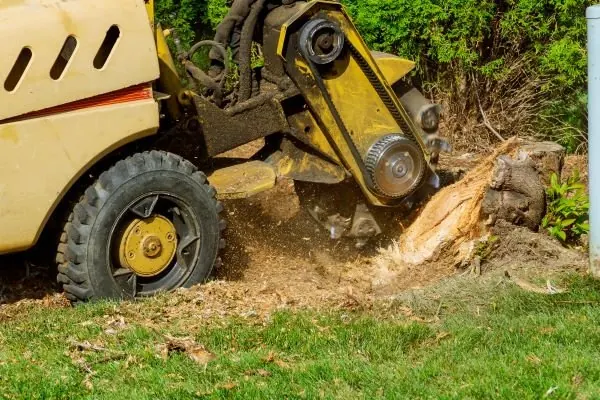
- Stump grinding of large eucalypt stumps with bigger machines. See stump grinding.
- Firewood cutting and stacking from removed trees.
Getting a price
Call the Greenbank line above or send the form. Tell us the number of trees, roughly how big, how close they are to buildings and power lines, and whether you want the timber left. Guide price bands for tree removal are on the prices page, and the storm season checklist is worth reading before summer.