Tree work in Ashgrove
Ashgrove is one of Brisbane's established inner-western suburbs, and its trees are as much a part of it as its houses. Many streets are lined with timber Queenslanders and post-war homes on sloping blocks, with backyards that have had sixty or more years to grow. Jacarandas, poincianas, mango trees, camphor laurels and big eucalypts are everywhere.
That makes tree removal in Ashgrove a particular kind of job. The trees are large and mature, the blocks are steep, and the houses are often highset timber with tin roofs that do not forgive a dropped limb.
What makes Ashgrove jobs different
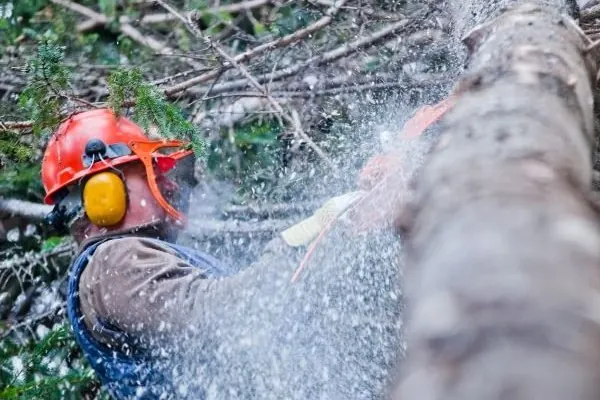
Slope. Plenty of Ashgrove backyards fall away sharply from the street, or climb steeply behind the house. Machinery that works on a flat block cannot get in. Most removals here are done by climbers with ropes, lowering sections onto the slope and carrying timber out by hand or with a winch.
Old trees close to old houses. A jacaranda planted beside a Queenslander decades ago can now be leaning over the verandah roof. Mangoes and figs often sit right beside the stumps of the house. These need careful sectional work, sometimes with a crane if a truck can reach.
Creek country. Ashgrove is cut by Enoggera Creek and its tributaries. Ground near the creek is softer and stays wet for days after heavy rain, and trees on those banks are more likely to fail in a storm. Vegetation along waterways can also be protected by council.
Council rules in Ashgrove
Ashgrove is within Brisbane City Council. The council's Natural Assets Local Law 2003 protects some trees on private land, including significant landscape trees and vegetation in mapped areas such as waterway corridors. Many character areas also have planning rules that consider trees as part of the streetscape.
The practical step is simple: check council mapping, or ask the contractor to, before anything is cut. If a permit is needed, apply first. Street trees on the footpath belong to council and must not be touched without its approval.
Storms and the western suburbs
Summer storms often build over the ranges to the west and track across Brisbane's western suburbs. Ashgrove's tall, mature trees on exposed ridges catch the wind first. After a severe storm, the most common jobs are limbs on roofs, split trunks and trees that have started to lean on saturated clay.
If you have a big tree that worries you, the time to have it looked at is before storm season, not after. The storm season checklist has a list of what to look for.
The trees we see most in Ashgrove
- Jacaranda. Wide, brittle and prone to dropping limbs over roofs and driveways.
- Mango. Big, dense and messy, and often right beside the house.
- Camphor laurel. A restricted invasive plant in Queensland, common along gullies and older yards, with roots that chase pipes.
- Weeping fig. Planted as a hedge or feature and now lifting paths and cracking walls.
- Eucalypts. Queensland blue gums and planted gums on ridges and in large yards.
Stumps on a slope
On a flat block, a stump grinder is wheeled to the stump. In Ashgrove, getting it there can be the hard part. Compact grinders can handle steps and narrow paths, but very steep drops sometimes mean the stump is cut flush and left, or dug out by hand. Ask about this when you get the tree removal quoted, and see stump grinding for how it works.
Booking a look
Call the Ashgrove line above or use the form. Mention the slope, the access, any power lines near the tree and whether the stump needs to go. Guide prices are on the prices page.